






Cheap Flights from Austin to Rome (AUS to ROM)
Austin to Rome is a long way and worth every hour of it. Compare cheap flights from Austin to Rome on CheapOair, then read the next section before you do anything else, because the Colosseum, the Vatican Museums and the Borghese Gallery now run on timed entry and a first trip to Rome succeeds or fails on how early you book them.
Austin to Rome Flight Information
- Distance: roughly 5,600 miles east
- Flight time: about 12 to 16 hours in total depending on the connection; the transatlantic sector itself runs 8 to 10 hours
- Departure airport: Austin-Bergstrom International (AUS), about 5 miles southeast of downtown Austin
- Arrival airports: Rome Fiumicino, Leonardo da Vinci (FCO), about 30 km southwest of the centre, and Rome Ciampino (CIA), about 15 km southeast, both under the ROM city code
- Routing: almost all Austin itineraries connect, through a US east coast gateway or a European hub
- Carriers: US and European network carriers and their alliance partners serve the corridor
- Typical low-fare month: Aim to travel well outside the European summer
- Time zone: Rome runs 7 hours ahead of Austin for most of the year. Europe and the United States change clocks on different dates, so the gap is 8 hours for two short windows each year
- Currency: the euro.
- Documents: a valid passport with sufficient remaining validity
What the travellers prefer
This is the most useful section on the page and the one that saves a trip. Rome's major sites no longer work on turning up.
The Vatican Museums and the Sistine Chapel. Book a timed entry directly with the Vatican as soon as your dates are fixed. The queue without a ticket runs for hours and the museums are vast, so go early in the day and plan two to three hours minimum. St Peter's Basilica itself is free and separate with its own security queue, and the dome climb is ticketed on the day.
The Colosseum, Roman Forum and Palatine Hill. One combined timed ticket covers all three and it sells out in high season. Book directly through the official site. The arena floor and underground levels need a separate upgraded ticket and those go fastest of all.
The Borghese Gallery. This is the one people miss. It operates a strict two-hour slot with a hard capacity limit and it sells out weeks ahead in season. It is also, for many visitors, the best museum in Rome, with the Bernini sculptures that justify the whole trip. Book it first.
The Last Supper is not in Rome. It is in Milan, it requires a timed ticket booked months ahead, and travellers regularly discover this too late. If it matters to you, plan the Milan leg deliberately.
One caution on third-party sellers. Buy from the official sites where you can. Resellers and bundled tours are legitimate but cost more, and some advertise "skip the line" access that is simply the timed ticket you could have bought yourself.
Fiumicino or Ciampino? Which Rome Airport
Fiumicino (FCO), properly Leonardo da Vinci, is where your Austin itinerary will almost certainly land. It sits about thirty kilometres southwest of the centre, handles the intercontinental traffic, and has a direct express train into the city. It is a large modern airport and the arrival is straightforward.
Ciampino (CIA) sits about fifteen kilometres southeast and handles low-fare European services. It has no rail link, so the transfer is a coach or a taxi, and while it is physically closer the journey is not faster. You would land here only on a European low-fare connection, which is worth knowing if you are building your own itinerary through a hub like London or Milan. Check the three-letter code on your own ticket, because the ROM code covers both and an onward transfer booked for the wrong airport is an expensive mistake.
How the Connection Works from Austin
Austin has grown its international network but transatlantic capacity remains limited, so this is a connecting journey and the routing choice matters.
- Through a US east coast gateway, which is the most common shape: a domestic sector to the east coast, then an overnight transatlantic flight into Fiumicino arriving the following morning. This gives you the most carrier choice and usually the best fares.
- Through a European hub, with a transatlantic flight into a northern European airport and a short connection down to Rome. The total journey is often similar and the European sector is comfortable, though it adds a second connection on a long day.
- Watch the connection time at the US gateway, because a tight domestic-to-international connection is the most common way this journey goes wrong. Two hours is comfortable; under ninety minutes is a risk worth paying to avoid.
- Clear immigration on the way home at the US gateway, not in Austin, which means your inbound connection needs real time: allow at least two and a half hours, and more at a busy gateway.
- Book the whole journey on one ticket rather than assembling separate bookings.
- Travellers may take the overnight eastbound and the daytime westbound, which is the standard shape and the one that handles the seven-hour shift best.
How to Find Cheap Flights from Austin to Rome
- Book early for summer and late for the shoulder. European summer fares rise steadily from spring and rarely fall; April, May, October and November behave differently and can soften closer in.
- Travel in the shoulder season. Late April to early June and late September to October give you the best weather of the year and fares well below July and August.
- Avoid Easter and the Jubilee and Holy Week periods, when Rome fills with pilgrims as well as tourists and both flights and hotels move sharply.
- Compare Dallas and Houston as alternative departures, which carry more transatlantic capacity, and weigh the ground journey against the saving.
- Be flexible by a day or two, which on a long-haul leisure trip is usually where the saving is.
- Consider an open-jaw itinerary, flying into Rome and home from another Italian or European city, which often costs no more and saves a backtrack.
- Price the whole trip rather than the flight. Rome in October with a cheaper hotel and no air conditioning anxiety can cost less overall than Rome in July on a lower fare.
When to Book Austin to Rome Flights
For airline tickets to Rome, aim for roughly 3 to 4 weeks before departure as a floor, and three to six months for a summer trip, since transatlantic leisure fares into Italy rise through the spring and the good hotels go with them. Cheapest month to travel generally sits at the softer end of the year. The peaks: July and August, the European summer and the dearest and hottest window; Easter and Holy Week, when Rome fills with pilgrimage traffic; the Jubilee and major papal events, which can fill the city at short notice and are worth checking before you fix dates; late May and June and September, the shoulder peaks, which are busy because they are the best weather; Christmas and New Year, and the Ferragosto week in mid-August, when much of Italy itself is on holiday and many Roman restaurants close. Return flights to Rome on a shoulder-season midweek pairing give the best value. Compare Round Trip Flights against an open-jaw, and browse cheap flights from Austin across your dates.
Airlines on the Austin (AUS) to Rome (ROM) Route
US and European network carriers and their alliance partners serve this market, with the transatlantic sector operating overnight eastbound and in daylight westbound. Aircraft on the Atlantic leg are widebody, and the domestic or intra-European sectors either side vary. Book the connection rather than the carrier, since on a journey this long the quality of the transfer matters more than the airline.
The eastbound sector is an overnight journey, so red eye flights is the normal shape rather than a compromise here, and sleeping on it is the single best thing you can do for your first day in Rome. Filter Non Stop Flights to see whether direct service operates on your dates, and compare International Flights if your plans are flexible.
Getting from Fiumicino into Rome
The Leonardo Express runs nonstop from Fiumicino to Roma Termini in about 32 minutes, every 15 to 30 minutes, and it is the simplest option. Buy at the machine or online and validate the ticket before boarding if it is a paper one.
The regional FL1 train is cheaper and stops at Trastevere, Ostiense and Tiburtina rather than Termini, which is better if your hotel is in Trastevere or the south of the city.
The taxi from Fiumicino to the centre runs on a fixed flat fare set by the city for destinations inside the Aurelian Walls, which is the single most useful thing to know on arrival. Agree that you are paying the flat rate before you set off, use the official white taxi rank outside the terminal, and ignore anyone who approaches you inside.
Ride-hailing operates and is a reasonable alternative with luggage or a late arrival.
Coaches run to Termini and are the cheapest option, taking around an hour depending on traffic.
Allow more time than you think going home. Fiumicino is large, the security and passport queues can be long in season, and a transatlantic connection is not something to run for.
A Texan's Guide to the Roman Summer
An Austin traveller is better equipped for this than most and should be told so, because the usual advice about the Roman summer is written for people who have never lived through a Texas July.
The heat is real but it is a dry-side heat, running into the mid thirties Celsius, which is the mid nineties Fahrenheit, with far less humidity than Austin. If you can handle August on the Colorado River you can handle August in Rome, and that is a genuine advantage over most visitors.
The difference is the shade and the air conditioning. Rome has less of both. Older hotels and apartments may have a single unit or none, the churches are cool but the piazzas are not, and the queues are in the sun.
So take the Roman approach, not the Texan one. Start at eight, see the outdoor sites before eleven, eat a long lunch, sleep or sit in a church through the worst of the afternoon, then come back out at six when the light turns and the city becomes extraordinary.
Confirm the air conditioning when you book rather than assuming it, and ask whether it runs all night, since some buildings restrict it.
Drink from the nasoni, the cast iron street fountains running continuously across the city. The water is cold, clean and free, there are thousands of them, and carrying a bottle to refill is what Romans do.
Ferragosto in mid-August is when Rome itself goes on holiday. Many of the best neighbourhood restaurants close for two or three weeks, which thins out exactly the places you want to eat.
And the real reason to come in summer is the evening: the long light, the outdoor dining, the city lit up, and Trastevere and the Campo at ten at night. That is worth the afternoons.
Top Things to See and Do in Rome
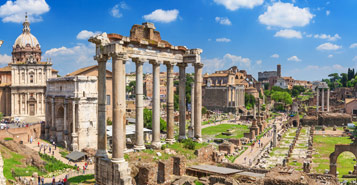
The ancient core first. The Colosseum, Roman Forum and Palatine Hill go together on one ticket and deserve most of a day, and the Forum rewards a guide or a good audio tour because the ruins do not explain themselves. The Pantheon is the most astonishing building in the city and the best preserved structure of the ancient world, with the open oculus and a dome unmatched for over a thousand years. It now charges a small entry fee.
The Vatican takes a morning: the Museums and Sistine Chapel on a timed ticket, then St Peter's separately. The Borghese Gallery in its park is the two hours most visitors regret missing, for the Bernini and Caravaggio. The Capitoline Museums on the Michelangelo-designed square are the oldest public museums in the world. Castel Sant'Angelo gives the best view of the city.
Then walk. The route from the Spanish Steps through the Trevi Fountain to the Pantheon and Piazza Navona takes an hour and covers the heart of the baroque city, and it is better early in the morning or late at night when the crowds thin. Trastevere across the river is the neighbourhood to spend an evening in. The Appian Way and the catacombs make an unusual half day. And go into churches at random, because Rome has hundreds and several hold Caravaggios and Berninis on the wall for nothing. Browse all flights to Rome across your dates.
Eating in Rome Without Eating Badly
Rome has some of the best food in Europe and some of the worst tourist restaurants, and they sit within a hundred metres of each other. The rules are simple.
- Walk two streets away from any major sight. The quality rises and the price falls almost immediately.
- Avoid anywhere with a photographic menu, a tout at the door or a menu in six languages. These are reliable signals.
- Eat the Roman dishes, which are a specific regional cuisine rather than generic Italian: cacio e pepe, carbonara made properly with guanciale and no cream, amatriciana, gricia, carciofi alla giudia in the Jewish Ghetto, trippa, and saltimbocca.
- Eat lunch like a Roman, which is the main meal and the best value, and have pizza al taglio by weight from a counter when you want something quick.
- Dinner starts late, from eight onwards, and a restaurant full at seven is usually full of visitors.
- The coperto is a small per-person cover charge and is normal rather than a scam. Tipping is modest and often rounded rather than a percentage.
- Drink the house wine, which in Rome is usually local and perfectly good, and order the Lazio whites.
- Go to Testaccio or the Ghetto for the best eating in the city, or Trastevere's back streets away from the main square.
Compare cheap hotels in Rome by neighbourhood: the centro storico for walkability, Monti and Trastevere for character and eating, Prati for the Vatican and quiet, and around Termini for value and transport.
Day Trips and Onward Travel
Ostia Antica, about forty minutes by train, is a Roman port city preserved almost as completely as Pompeii and visited by a fraction of the people, which makes it the best value half day from Rome. Tivoli, an hour east, holds Hadrian's Villa and the Villa d'Este gardens, both UNESCO sites. Orvieto, ninety minutes north by train, is a hill town with a remarkable cathedral.
For a longer trip, Italy's high-speed rail is excellent and usually better than flying domestically: Florence in about 90 minutes, Naples in about 70 minutes, which puts Pompeii and the Amalfi coast within reach, Venice in under four hours, and Milan in about three. Price flights to Naples or flights to Florence only if the rail timing does not suit you. Browse flights to Italy more widely, and use Multi City Flights for an open-jaw itinerary, which on an Italian trip usually saves a backtrack at no extra cost.
Best Time to Visit Rome
Late April to early June and late September to October are the best windows, with warm days, cool evenings, long light and everything open. They are busy because they are good, so book ahead. July and August are hot and crowded, covered above, and are also the cheapest hotel months in the centre because Romans leave. November is underrated: cool, often clear, far quieter, and the lowest prices of the year outside the holidays. December through February is cool and damp with short days, the queues almost gone, and the city at its most liveable, with the Christmas period the one busy exception. March and early April bring the spring and the Easter crowds, so check where Easter falls before fixing your dates. Compare Austin vacation packages for the return leg, or widen your departure search across Texas.
Ways to Plan and Book with CheapOair
ClubMiles rewards: earn points on every booking toward the next trip.
Book Now Pay Later: split the cost into smaller payments with book now pay later financing, which on a long-haul trip is worth considering.
Wider search: check last minute flights when plans firm up late.
Ready to book? Fix your dates, then book the Borghese, the Vatican and the Colosseum the same week, in that order. Allow a real connection at the US gateway in both directions, take the Leonardo Express or the flat-fare taxi, leave the car alone, refill your bottle at the nasoni, start at eight and come back out at six. Book cheap flights from Austin to Rome on CheapOair.
FAQs: Austin to Rome Flights
How long is the flight from Austin to Rome?
About 12 to 16 hours in total depending on the connection, with the transatlantic sector itself running 8 to 10 hours. Austin itineraries almost always connect.
Is there a nonstop flight from Austin to Rome?
Austin has limited transatlantic capacity, so expect a connection through a US east coast gateway or a European hub. Filter for nonstop service to see whether any operates on your dates.
What is the time difference between Austin and Rome?
Seven hours ahead for most of the year. Europe and the United States change clocks on different dates, so the gap widens to eight hours for two short windows each year.
Which Rome airport will I land at?
Almost certainly Fiumicino (FCO), about 30 km southwest of the centre, which handles intercontinental traffic and has the express train. Ciampino (CIA) serves low-fare European routes and has no rail link.
What should I book before I book anything else?
The Borghese Gallery, which has a hard capacity limit and sells out weeks ahead, then the Vatican Museums and the Colosseum combined ticket. Do all three the week your dates are fixed.
Can I visit the Colosseum without a ticket?
Not practically in season. One timed ticket covers the Colosseum, Roman Forum and Palatine Hill, and the arena floor and underground levels need a separate upgraded ticket that sells out fastest.
How do I get from Fiumicino into Rome?
The Leonardo Express runs nonstop to Roma Termini in about 32 minutes. The regional FL1 train is cheaper and serves Trastevere and Ostiense, and taxis to the centre run on a fixed flat fare.
Should I rent a car in Rome?
No. Central Rome is covered by camera-enforced ZTL limited traffic zones, and driving into one generates an automatic fine that the rental company passes to you months later with a charge on top.
Can I drink the water from the street fountains?
Yes. The nasoni run continuously across the city, the water is cold and clean, there are thousands of them, and carrying a bottle to refill is what Romans do.
How hot does Rome get in summer?
Into the mid thirties Celsius, the mid nineties Fahrenheit, with far less humidity than Austin. The difference is the shade and the air conditioning, so confirm the air conditioning when you book.
What is Ferragosto?
The mid-August holiday when Rome itself empties. Many of the best neighbourhood restaurants close for two or three weeks, which thins out exactly the places you want to eat.
What Roman dishes should I order?
Cacio e pepe, carbonara made with guanciale and no cream, amatriciana, gricia, carciofi alla giudia in the Jewish Ghetto, and saltimbocca. Walk two streets away from any major sight first.
What is the coperto on my bill?
A small per-person cover charge, which is normal in Italy rather than a scam. Tipping is modest and often just rounding up rather than a percentage.
What is the best day trip from Rome?
Ostia Antica, about forty minutes by train, a Roman port city preserved almost as completely as Pompeii and visited by a fraction of the people. Tivoli and Orvieto are the other two.